
Care, Agency, and the Right to Choose
Never Kiss a Man in a Christmas JumperThis thread examines how Maggie’s caregiving identity and Marco’s dependence expose the difference between supporting another person and taking responsibility for their choices.
increasing Bearing strength in each event
 decreasing
Bearing strength in each eventdecreasingCompetence as Identity
Competence as Identity
A practiced caretaker
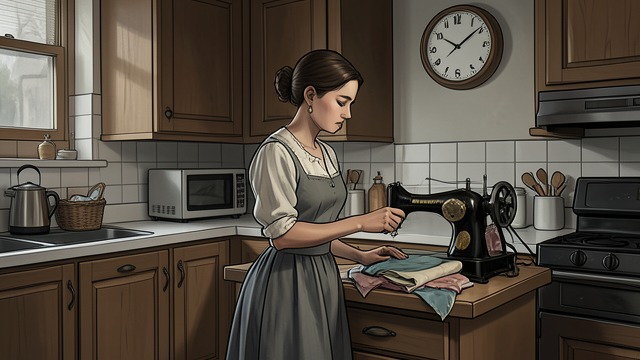
Maggie’s adult life has been shaped by responsibility. She became a mother young, helped Paddy through a period of drinking, and built a business whose work involves not only making dresses but guiding anxious brides through emotionally charged preparations.
Her competence is real and hard-won. It also gives her a stable identity: when other people need something, Maggie knows how to respond, even when she is uncertain about her own needs.
The cost of usefulness
The role brings her close to other people’s turning points while leaving her personal life comparatively quiet. Maggie can offer brides practical reassurance about love and commitment, yet rarely imagines those forms of happiness for herself.
This contrast introduces a tension between care as a meaningful choice and care as a way of disappearing into other people’s lives. Her challenge will not be to stop caring, but to recognize that she is entitled to be more than indispensable.
The Patient Who Resists
The Patient Who Resists
Dependence imposed by injury
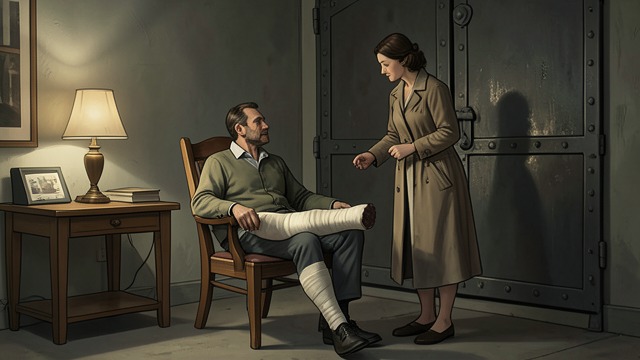
Marco’s broken leg brings him into Maggie’s home and into a recovery routine that limits his independence. The nurse explains the care instructions to Maggie, while Marco becomes frustrated at being discussed as if he were not present.
His irritation reflects more than physical pain. As an attorney accustomed to making decisions and directing his own work, he finds helplessness humiliating and initially resents the people who are trying to keep him safe.
Negotiating care
Maggie refuses to accept his rudeness, but also recognizes that his frustration has a cause. She sets expectations for how they will manage the arrangement and offers help without pretending that he is incapable of having a say.
Their early conflict establishes a reciprocal dynamic. Maggie is not merely a nurse in the household, and Marco is not merely a passive patient: both must learn how to give and receive support without turning vulnerability into control.
Help Without Humiliation

Help Without Humiliation
The limits of assistance
Maggie frequently anticipates what Marco might need, from arranging transport to managing his appointments and adapting the household. Marco sometimes resists that help because accepting it makes his injury feel like a loss of manhood and control.
Their disagreements reveal that practical kindness can still feel intrusive when it leaves the recipient with no agency. Maggie sometimes has to learn to ask before acting, while Marco must recognize when pride is making his recovery harder.
A negotiated partnership
The two gradually develop a language for balancing help and independence. Marco accepts assistance with tasks he cannot safely manage, while Maggie gives him room to do what he can himself.
The change matters beyond his injury. Their relationship begins to operate as a partnership rather than a caretaker-and-dependent arrangement, allowing each person to offer care without reducing the other to a role.
Care Becomes Mutual

Care Becomes Mutual
Maggie receives what she usually gives
When Ellen and Paddy discover that Maggie has concealed her Christmas plans, their anger comes from the love she tried to spare them. Marco also speaks up, proposing that she accompany him rather than remain alone.
Maggie is accustomed to protecting others from worry, but these exchanges show that her family and new companions do not experience her only as a caregiver. They want to take her feelings seriously and make room for her needs.
Emotional support in both directions
At Isabel and Michael’s hospital wedding, Marco stays beside Maggie as she grieves for the couple’s sudden uncertainty. He offers quiet physical comfort while she shares in a celebration that is beautiful precisely because its future is not guaranteed.
The support is reciprocal: Maggie has been helping Marco through his recovery, but he can also help her remain present with difficult feelings. Their intimacy grows through acts of attention, not through a division in which one person is always strong and the other always needs care.
Respecting Another Person’s Choice

Respecting Another Person’s Choice
Protection turned into control
Maggie leaves Marco because she believes that his capacity for fatherhood makes a life with her unfair to him. Although her motive is protective, she makes the decision without allowing him to weigh the trade-offs for himself.
Marco’s search forces the issue into the open. He acknowledges the real difficulty of her infertility while insisting that he, not Maggie, must decide what matters most to him in a shared future.
Care through honesty
Maggie accepts that avoiding pain is not the same as caring well for someone. She can tell Marco what she fears, but cannot treat her fear as authority over his choices or their relationship.
Their renewed commitment reframes care as respect for another person’s agency. A year later, their marriage rests not on Maggie’s certainty that nothing will go wrong, but on a decision they have made together with full knowledge of what remains uncertain.
Before the bicycle collision in early December
The day Marco arrives at Maggie’s home
During Marco’s first week of recovery
From the family conversation at the pub to the hospital wedding
On Christmas Day beside the river, after Marco’s hospital discharge
